All Categories
Featured
Table of Contents
Deloitte found 49% of CFOs plan to handle expenses by promoting/hiring internally , showing many organizations will slow external hiring. LinkedIn information (2024) suggested 90% of United States business now outsource at least some finance procedures, showing ongoing reliance on outsourcing to manage expenses . Offshore cost contrasts are stark: one report notes the all-in $100k+ expense of an entry-level US accounting professional versus far lower offshore rates, suggesting 70-75% labor cost arbitrage .
Updating legacy finance systems has its own expenses, however market surveys report these projects pay back rapidly. For example, a SnapLogic research study discovered business spend $3M usually to upgrade tradition combinations, but thereafter achieve faster releases and cost savings in IT overhead . As Gartner's figures indicate, CFOs anticipate such investments to yield increased speed and quality of insight, offsetting the upfront invest.
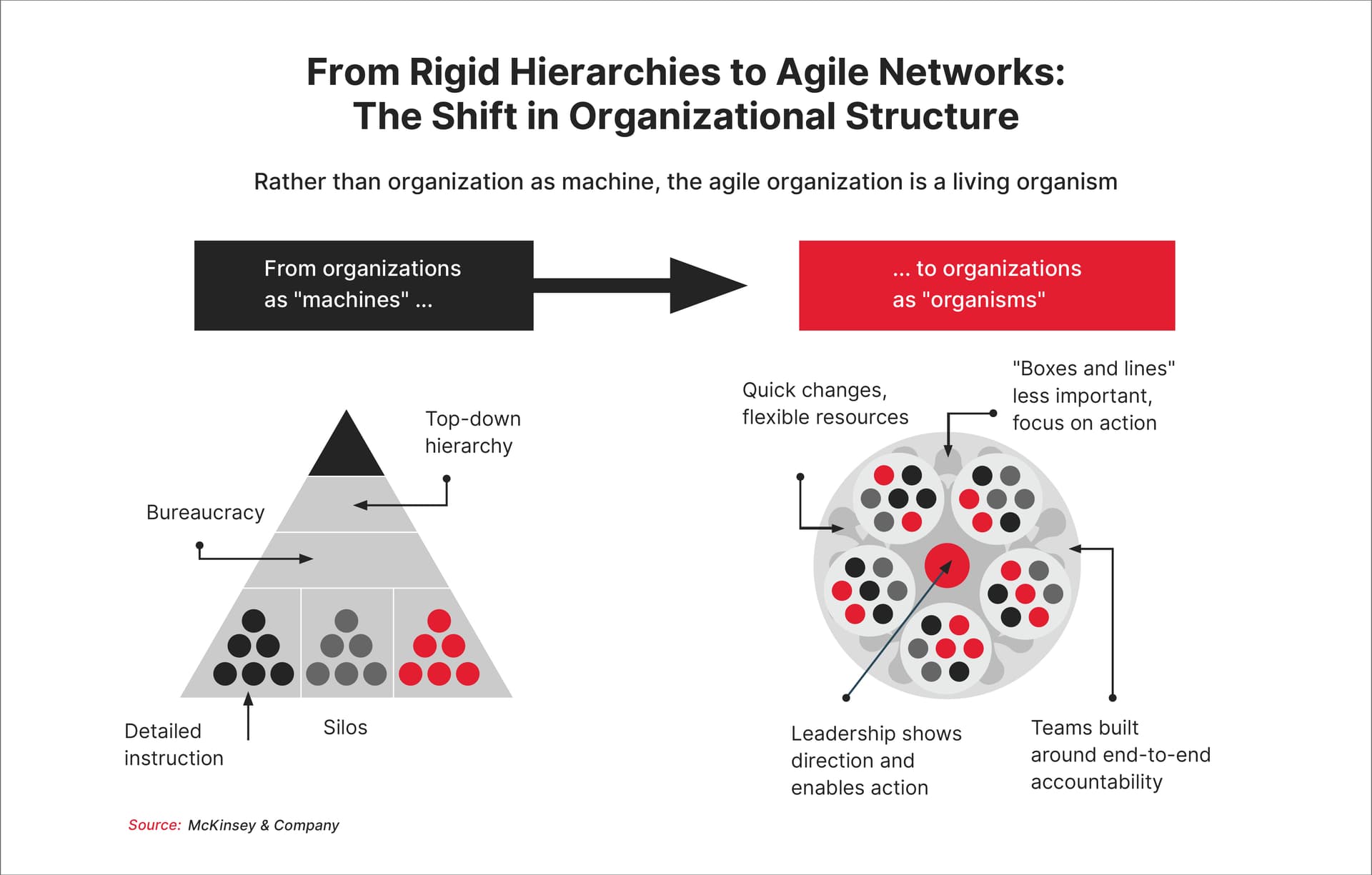
Attention is on measurable results cost reductions, forecasting accuracy improvements, efficiency ratios rather than vague cuts. As one council member in the AFP study commented, it is crucial to be transparent about cost programs ("you need to be truthful about what you are doing and communicate that we may stop hiring but not cut tasks" ) stressing that completion objective is stronger business performance.
Refining Global Capability Center Frameworks for 2026 Growth
Procedures consisted of streamlining product lines, decreasing procedure waste, renegotiating supplier contracts, and reallocating existing personnel (instead of brand-new hires) to concentrate on high-priority jobs . Crucially, all cost savings were then reinvested in growth-oriented programs. This example shows a structured program led by financing can generate significant repeating cost savings without headcount cuts, and that those cost savings can fuel product innovation or market expansion.
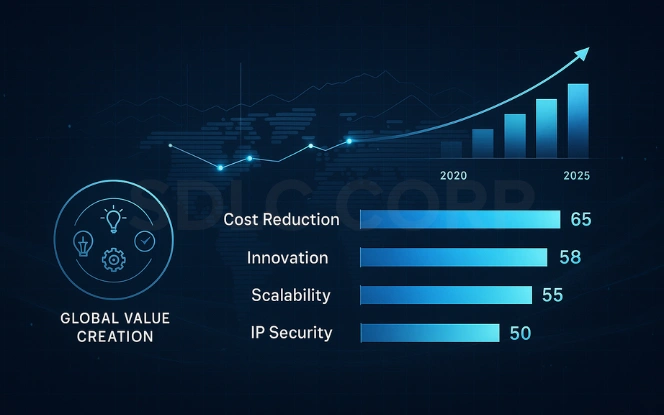
The FP&A team led a transformation program with 3 pillars: expense reduction, cost avoidance, and procedure effectiveness . For expense reduction they cut expenses (e.g. headcount freeze, cutting non-critical projects), and for expense avoidance they tightened up budget plans to prevent future escalations. Critically, they also by accelerating collections, reducing inventory days, and improving reporting efficiency.
Operating capital (stock and receivables) improvements alone maximized money and enhanced competitiveness (the company might use much better rates while maintaining margins). This case exemplifies how a finance-led effort, combining tactical and strategic levers, can achieve considerable bottom-line effect. Even big banks highlight the exact same compromises. JPMorgan's tech management frames innovation costs in terms of "unit cost" per transaction .
The double-edged method is obvious: JPMorgan jobs $17B in tech spending for 2024 (among the biggest in the market) while concurrently slashing out-of-date facilities and increasing outputs. Not a common mid-market CFO example, it illustrates that finance leaders are lining up metrics (cost per digital client, and so on) with strategic innovation.
Breaking Down Cultural Silos in Distributed Tech TeamsThese investments make the financing function more forward-looking and decrease labor expenses in the long run. Market analyses (e.g. Innovature BPO) reveal that countries like the Philippines and Vietnam offer specialized financing services at 7075% lower labor cost. One company reported that with AI-enabled tools, a Vietnamese outsourcing accountant can achieve 1.5 x the productivity of a similarly skilled American accounting professional .
Strategic Global Capability Center Playbooks for Future Success
Many CFOs now consider this a basic practice: one report claims to control expenses and fill ability gaps . In Asia-Pacific, CFOs are taking longer views. For instance, research highlights that many APAC business are collaborating with providers on sustainability projects, which minimize costs through shared R&D (Bain report) .
CFOs in this context are investing in environment-related efforts not only for compliance but likewise for expense decrease (e.g. 30% savings from energy-efficient cooling systems ). They also purchase risk-modelling platforms after geopolitical shocks one CFO quoted stated their group now frequently stress-tests situations (e.g. trade embargoes, currency volatility) to prepare cash-flow reactions .
Using Freelance Networks to Supplement Permanent GCC ScalingEach of these examples reinforces crucial lessons: In Campbell and the automobile case, savings originated from cuts and from performance enhancements (e.g. better inventory management). In JPMorgan, expenses were cut by retiring old systems even as brand-new tech was released. CFOs explicitly redirect resources, not simply trim spending plans. In every case, financing leaders worked carefully with operations, supply chain, marketing and IT.
In the automobile case, aligning sales rewards (marketing invest) with collections needed cross-team planning. This highlights that cost techniques typically ripple out of financing into the wider business. The companies utilized data (analytics and reporting) to identify cost drivers: the automobile company determined that sluggish receivables and long stock cycles were the most significant profit drag .
Shifting From Legacy Outsourcing to Advanced Global Hubs
The AFP council conversation highlights that openness is important . When companies communicate that cost programs aim to repurpose resources (not cut tasks), they get better buy-in and avoid undercutting spirits. Senior sponsors (often the CFO herself) need to lead the narrative that cost optimization makes it possible for growth, not austerity for its own sake.

Latest Posts
Corporate Cost Efficiency Through Lean Sourcing
Essential Strategies for Successful Global Expansion
Offshore Delivery Frameworks: Cost Implications in 2026